
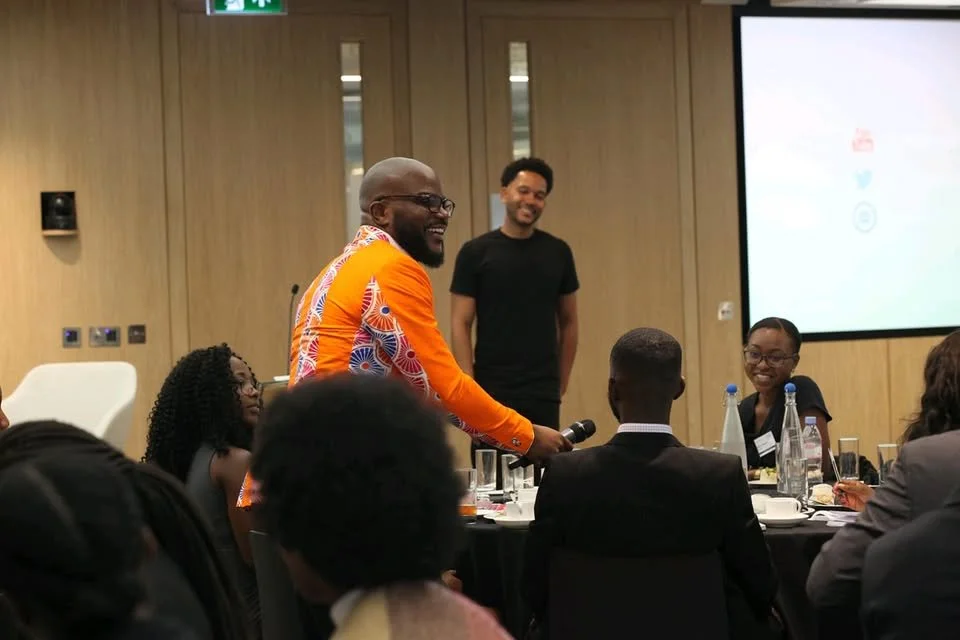
Journey of Be(coming) into Relationship Health.
Strengthening the relationships through which organisational life is experienced.
What might we recognise, strengthen or shift in the relationships shaping how your people and organisation thrive together?
✳︎
✳︎
✳︎
Relationship health is as important as financial health in an organisation.
✳︎
✳︎
✳︎
What might we recognise, strengthen or shift in the relationships shaping how your people and organisation thrive together? ✳︎ ✳︎ ✳︎ Relationship health is as important as financial health in an organisation. ✳︎ ✳︎ ✳︎


Relationships are not a background feature of organisational life.


They are where people experience trust, belonging, leadership, difference, accountability and care. They're also the infrastructure through which knowledge travels, ideas develop, decisions are made and shared work becomes possible.
The Journey of Be(coming) into Relationship Health creates space for organisations and their people to strengthen the relational conditions through which they collaborate, grow and serve.
Reimagining Relationship Health.
Relationship Health isn't only concerned with what happens when relationships become strained — it also explores the conditions through which trust, learning, creativity, collaboration and shared purpose can grow.
Healthy relationships don't require constant harmony or the absence of tension. They can hold difference. They create enough trust for people to speak honestly, listen with curiosity, maintain boundaries, offer constructive challenge and take responsibility for their impact.
Relationship Health invites us to explore how people:
connect without requiring sameness;
communicate across difference and uncertainty;
balance care with challenge;
maintain boundaries while contributing to shared purpose;
navigate power, participation and responsibility; and
respond constructively when trust is tested.
Where relationships have been strained, repair may become part of the Journey. Repair doesn't mean ignoring harm or asking people to reconcile without meaningful change — it may involve acknowledgement, learning, changed behaviour, renewed agreements or clearer boundaries.
The Journey doesn't assume everyone carries equal power or responsibility for repairing a relationship. Organisational authority, status, identity and previous experiences may shape what can safely be voiced, what accountability requires and how participation should be stewarded.
The Reality We Recognise.
Organisations depend on relationships every day. People coordinate work, exchange knowledge, navigate pressure and rely on one another to fulfill shared responsibilities. Yet the health of these relationships can remain invisible until trust begins to weaken or something goes wrong.
Communication training or team-building may offer valuable moments of connection — but relational difficulties don't always arise from a lack of communication skills. They may be shaped by unclear expectations, unacknowledged power differences, unresolved experiences, competing priorities, depleted capacity, or conditions that leave little room for listening and constructive challenge.
When these influences remain unexplored, relational strain can become individualised — reduced to a "difficult person," a personality clash, or a failure to collaborate. People continue working alongside one another while withholding concerns, avoiding necessary conversations, or carrying the emotional cost of relationships that no longer feel trustworthy.
What appears to be a communication problem may be asking for a deeper relational inquiry.

The Scope We Hold.
This Journey supports organisational learning, reflection and facilitated dialogue.
It does not require people to remain in relationships or conditions that are unsafe or harmful. Nor does it assume that dialogue or repair will always be safe, possible or appropriate.
The Journey is not therapy or formal mediation, and it does not replace grievance, disciplinary, safeguarding or investigation processes, clinical care or legal advice.
Where formal action is required, relational learning must not be used to bypass responsibility.
FAQs
When might this journey be calling?
When trust or connection feels limited despite people working closely together, when concerns go unspoken or conflict repeats without movement, when collaboration relies too heavily on particular individuals, or when the organisation wants to build relational resilience proactively.
These aren't judgements about particular people, just signals the relational system may benefit from shared inquiry.
What questions might we explore together?
Shaped around the relationships and context calling for attention, it may look at how trust, connection and belonging are experienced, how people navigate difference and challenge, the influence of power and identity, and how accountability and repair are practised.
The purpose isn't to prescribe one way to relate, but to strengthen the capacity to relate with humanity, responsibility and connection.
What movement might become possible?
Every relational terrain has its own history, so movement isn't promised in advance — it may include stronger trust and shared language, more confidence approaching difficult conversations, healthier boundaries, and more constructive experiences of challenge and repair.
Evaluation is built in: noticing not just what people understood, but what's changing in how they relate, collaborate and respond when relationships are tested.
How Might the Journey Deepen?
The Journey provides a co-designed path for exploring the wellbeing possibility.
The Engagement describes the depth of partnership and stewardship needed to support it.
A focused starting point around a clearly defined relational question—creating shared language, exploring selected experiences and identifying practical commitments or experiments.
Foundation Engagement
Deepened Engagement
A more extended Journey involving wider participation, practice and reflection—helping people strengthen dialogue, navigate emerging tensions and apply learning over time.
Integrated Engagement
A sustained partnership connecting Relationship Health with leadership, culture, systems and organisational practices—while strengthening internal capability to steward relationships beyond the Engagement.
These are not levels of quality or fixed packages. Each can stand as a responsible Engagement in its own right.
The depth changes. The integrity does not.
A Distinct Journey Within an Interconnected Terrain
Relationship Health focuses primarily on the quality of connection through which organisational life is experienced.
It is also a thread running through every other Journey:
Systemic Wellbeing may be calling where organisational conditions are repeatedly depleting people’s relational capacity.
Inclusive Leadership may be calling where power, influence and leadership behaviour require deeper attention.
Career Progression may be calling where relationships influence access to opportunity, sponsorship, recognition or mobility.
Values-Aligned Culture may be calling where relational experiences reveal a gap between stated values and everyday practice.
Possibility Scoping helps us discern whether Relationship Health is the primary doorway or whether another Journey offers a more responsible place to begin.
Where Might the Journey Begin?
You may be noticing a particular relational tension, a recurring pattern, or a desire to strengthen connection before trust begins to erode. You don't need to identify who's at fault or arrive with a predetermined solution.
A complimentary Possibility Conversation creates space to explore what's happening, whose perspectives may need to be heard, and whether The UHDC could responsibly support the Journey ahead. Not every conversation needs to become a commission.
Where partnership feels possible, commissioned Possibility Scoping explores the relational terrain more deeply — its purpose, history, perspectives, power dynamics and the conditions required for participation to be responsible and worthwhile — helping identify the smallest responsible Engagement capable of giving the Journey the space, care, challenge and stewardship it needs to take root.