
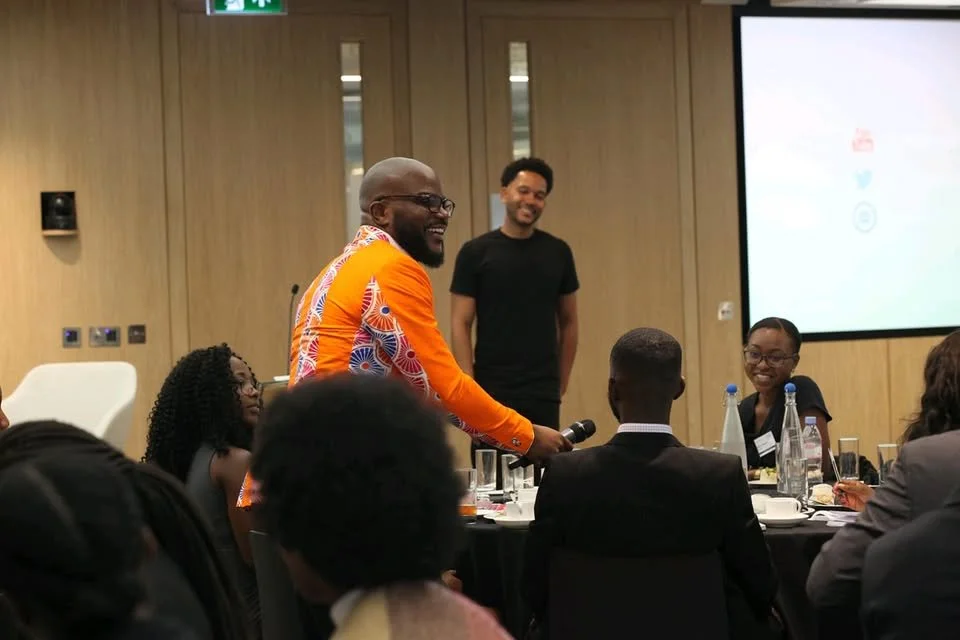
Journey of Be(coming) into Inclusive Leadership.
Exercising power with responsibility, responsiveness and accountability.
Inclusive Leadership is not simply the inclusion of more people within conditions that remain unchanged.
✳︎
✳︎
✳︎
How might leadership expand participation, contribution and possibility for everyone?
✳︎
✳︎
✳︎
Inclusive Leadership is not simply the inclusion of more people within conditions that remain unchanged. ✳︎ ✳︎ ✳︎ How might leadership expand participation, contribution and possibility for everyone? ✳︎ ✳︎ ✳︎


Inclusive leadership isn't an 'us and them.' It's how we use power and influence to build belonging — at every level.


Leadership is experienced not only through strategy or formal decisions, but through whose voice is heard, whose knowledge is valued, and who is enabled to grow.
The Journey of Be(coming) into Inclusive Leadership examines how power and influence travel through organisational life — and how leadership can create the conditions for more people to participate, contribute and flourish.
The Reality We Recognise.
Many organisations want their leaders to become more inclusive.
They introduce leadership principles, behavioural frameworks, inclusion learning, expectations around listening, belonging and psychological safety.
These investments can be valuable. Yet inclusive leadership can become reduced to a set of techniques: invite contributions, demonstrate empathy, challenge bias, seek different perspectives.
Behaviour matters. But behaviour doesn't operate outside power, relationships and organisational conditions.
People may be invited to speak while carrying disproportionate risk for disagreeing. Perspectives may be gathered without meaningfully influencing decisions. Leaders may express inclusive intentions while systems keep distributing recognition, opportunity and authority unevenly.
Leadership is exercised through formal authority and everyday influence alike. But those with greater positional power carry greater responsibility for the conditions their decisions create.
Inclusive Leadership therefore asks not only whether leaders intend to include, but what their leadership makes possible for others.
Reimagining Inclusive Leadership.
Inclusive Leadership is not simply including more people within conditions that stay unchanged.
It examines how leadership shapes participation, contribution, opportunity and belonging — and how those exercising power respond to the experiences and knowledge of the people they lead and serve.
Within this Journey, inclusive leadership is:
Responsible — aware that power, decisions and behaviour have consequences for others;
Responsive — willing to listen, learn and adapt as new experiences and perspectives come into view; and
Accountable — prepared to examine impact, own decisions and follow understanding with action.
Inclusive Leadership doesn't require leaders to have every answer, or to guarantee everyone experiences each decision the same way. It asks them to exercise influence with greater awareness, stay open to challenge, and create pathways through which people can shape organisational life.

The Scope We Hold.
This Journey supports leadership and organisational development.
It does not provide legal advice, nor replace an organisation's responsibilities under equality law, or its formal grievance, disciplinary, safeguarding and investigation processes.
Shared learning must never be used to diffuse responsibility where discrimination, harassment or other harm requires formal action.
FAQs
When might this journey be calling?
This Journey may be helpful when inclusion is named as a value but experiences of voice, belonging and opportunity stay uneven; when participation is encouraged yet the same voices keep shaping decisions; when leaders want to be inclusive but lack confidence navigating difference or challenge; or when change is being led without enough participation from those affected.
It's also worth exploring when leaders are gathering people's experiences but are unclear what should follow, or when an organisation wants to deepen accountability rather than rely on good intention alone.
These aren't judgements about whether particular leaders are good or bad — they're signals inviting inquiry into leadership, power and organisational conditions.
What questions might we explore together?
The Journey is shaped around your organisation and its leadership context. It explores how power and leadership are experienced, how intention translates into impact, and how voice, participation and belonging are enabled or constrained — and how leaders stay responsive and accountable once they've listened.
The purpose isn't to prescribe a single ideal leader, but to strengthen the capacity to exercise power and influence in ways that expand participation and possibility.
What movement might become possible?
Every leadership terrain carries its own history, and the movement this Journey supports is shaped with the organisation and its people rather than promised in advance.
Depending on its purpose and depth, that movement may include a stronger shared understanding of inclusive leadership and power, greater confidence navigating difference and accountability, and observable changes in how leaders invite participation, make decisions and respond to challenge.
It may also build stronger alignment between listening and action, greater agency and recognition across the organisation, and the internal capability to keep developing inclusive leadership over time.
Evaluation is part of the Journey — noticing not only what leaders understood, but what's changing in how power is exercised and what becomes possible for others.
How Might the Journey Deepen?
The Journey provides a co-designed path for exploring the leadership possibility.
The Engagement describes the depth of partnership and stewardship needed to support it.
Foundation Engagement
A focused starting point around a defined leadership question—creating shared language, exploring lived leadership experiences and identifying practical commitments or experiments.
Deepened Engagement
A more extended Journey involving reflection, practice and wider participation—helping leaders connect learning with everyday decisions, relationships and organisational realities.
Integrated Engagement
A sustained partnership connecting Inclusive Leadership with culture, progression, relationships, systems and organisational purpose—while strengthening internal capacity to continue the work.
These are not levels of quality or fixed packages. Each can stand as a responsible Engagement in its own right.
The depth changes. The integrity does not.
A Distinct Journey Within An Interconnected Terrain
Inclusive Leadership focuses primarily on the exercise of power and influence.
As the Journey unfolds, it may reveal connections with other terrains:
Systemic Wellbeing may be calling where leadership decisions are shaping people’s capacity, energy or experience of work.
Relationship Health may be calling where trust, communication, boundaries or repair require deeper attention.
Career Progression may be calling where access to development, sponsorship, recognition or mobility is uneven.
Values-Aligned Culture may be calling where leadership behaviour reveals a gap between organisational commitments and everyday experience.
Possibility Scoping helps us discern whether Inclusive Leadership is the primary doorway or whether another Journey offers a more responsible place to begin.
Where Might the Journey Begin?
You may be developing new or experienced leaders, navigating organisational change, or noticing a gap between inclusive intention and lived experience. You don't need to arrive with a completed framework or a ready-made solution.
A complimentary Possibility Conversation creates space to explore what leadership is being asked to hold, whose experiences may need to inform the Journey, and whether The UHDC could responsibly support the work ahead. Not every conversation needs to become a commission.
Where a partnership feels possible, commissioned Possibility Scoping lets us explore the leadership terrain more deeply — its purpose, context, perspectives, power dynamics, and the conditions needed for meaningful participation and practice. From there, we can identify the smallest responsible Engagement capable of giving the Journey the space, challenge, accountability and stewardship it needs to take root.